
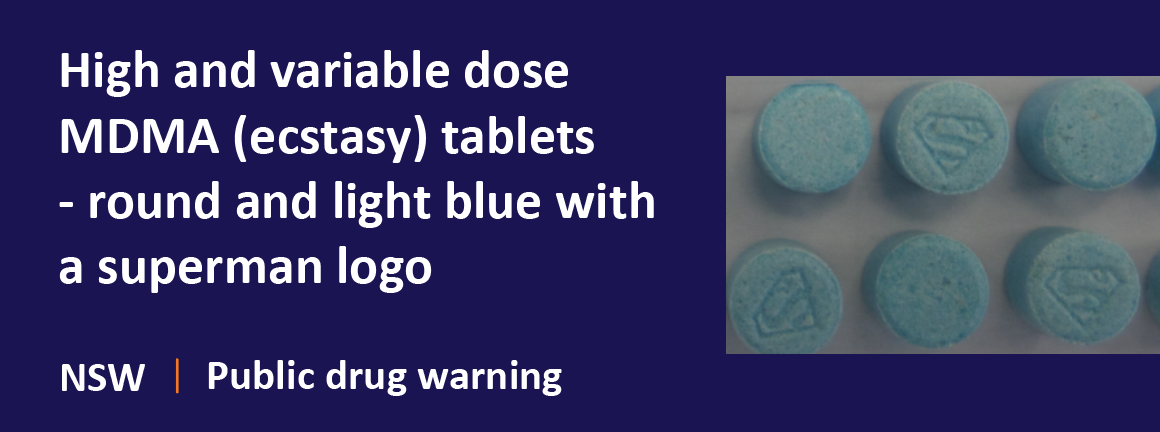
NSW Public drug warning - High and variable dose MDMA (ecstasy) tablets - round and light blue with a superman logo
Published on December 15, 2021
Source: https://www.health.nsw.gov.au/aod/public-drug-alerts/Pages/high-dose-mdma.aspx
Emergency: If you are experiencing an emergency, please call an ambulance on 000, or if you need to speak to someone urgently please call the National Alcohol and Other Drug Hotline on 1800 250 015.
High dose MDMA tablets have been found at a NSW music festival in December 2021, average dose of 164mg
Know the risks
- You are at increased risk of harm if you:
- take multiple MDMA (ecstasy) tablets or capsules
- take a high-dose MDMA (ecstasy) tablet or capsule
- use other stimulant drugs (e.g. methamphetamine, cocaine or caffeine) at the same time
- use alcohol, certain medicines or illicit drugs at the same time
- Hot and humid weather will also increase the risk, as MDMA causes the body to dangerously overheat.
- MDMA (ecstasy) is often poorly manufactured and the amount of MDMA in a tablet or capsule can vary a lot, even within the same batch.
- The time from taking the drug to feeling any effect can vary significantly depending on the drug as well as the individual person.
- MDMA (ecstasy) has been linked to death, serious harm and life-long complications.
Effects to look out for
- Feeling really hot, light headedness, rigid muscles, confusion or agitation, racing pulse/heart, feeling aggressive, uncontrolled repetitive movements, vomiting, seizures, difficult to rouse / unconscious.
Getting help
- Seek help immediately from your nearest emergency department or call Triple Zero (000).
- Start CPR if someone is not breathing.
Support and advice
For free and confidential advice:
- Call Alcohol and Drug Information Service (ADIS) on 1800 250 015 at any time 24/7. Start a Web Chat with an ADIS counsellor Mon-Fri, 8.30am-5pm.
- Call NUAA on 1800 644 413 (Mon-Fri 9am-5pm) to speak to a peer or visit NUAA for a range of resources.
- Call the NSW Poisons Information Centre on 13 11 26 for information on adverse effects from drugs.
- Visit Your Room for fact sheets and other resources.
Take Home Naloxone Program
- It is becoming more common for substances to be contaminated with opioids. Signs include loss of consciousness, slow/difficult breathing, skin turning blue. Anyone who uses drugs can get naloxone, which reverses opioid overdose.
- Naloxone is free, for participating locations and more information: https://yourroom.health.nsw.gov.au/getting-help/Pages/Naloxone.aspx.
Call '000' even if naloxone has been administered.
Current as at: Monday 27 December 2021
Contact page owner: Centre for Alcohol and Other Drugs